- Quadruped Robots Take Center Stage: Unitree Opens the Consumer Market
- Unitree’s Strength Extends Beyond Quadrupeds: The G1 Humanoid Demonstrates Commercialization
- Industrial Quadrupeds Built for Harsh Environments: DEEP Robotics
- Compact Yet Powerful: GENISOM AI’s Gangben L1
- The Most Eye-Catching Humanoid: Agibot’s Expedition A2
- Collaborative Industrial Robotics: JAKA Robotics’ Zu12
- Robotics Expanding into Education and Households: UBTECH’s alpha ebot
- Beyond Robots: The Broader Ecosystem Behind the Hangzhou Six Little Dragons
- China’s Robotics Industry: Strengths and Remaining Challenges
- Robotics Education Is Expanding Rapidly
- Conclusion: What Japan Can Learn from China’s Robotics Momentum
Visit to a Hangzhou Robotics Exhibition: Exploring the Current State of China’s Robotics Industry

Shizuka EguchiBackend Developer
A visit report from the Wensan Future Technology Experience Center. From the “Hangzhou Six Little Dragons” to consumer robotics, industrial robots, and educational applications, this article explores the forefront of China’s rapidly growing robotics ecosystem.
Visit to a Hangzhou Robotics Exhibition: Exploring the Current State of China’s Robotics Industry
Spring in Hangzhou’s Xihu District. Amid the vibrant atmosphere of the Wensan Digital Life Block stands a cutting-edge exhibition space that symbolizes China’s emerging productive forces: the Wensan Future Technology Experience Center.
Also known as the Deep Space Robotics Future World, this approximately 800-square-meter facility is filled not with static panels or boring specification charts, but with real robots that visitors can see, touch, and experience firsthand.

The exhibition features a wide range of robots, from consumer home robots to industrial-grade machines, including quadruped robots and advanced humanoid robots. Many of the showcased technologies come from leading companies driving China’s robotics industry, including the well-known Hangzhou Six Little Dragons.
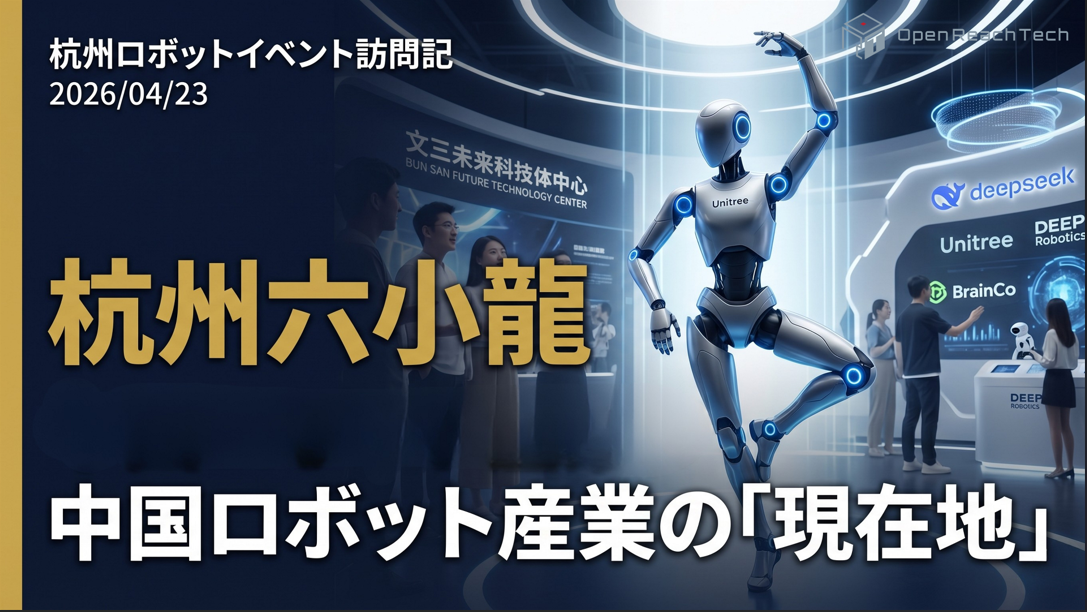
The “Hangzhou Six Little Dragons” is a nickname referring to six emerging tech companies based in Hangzhou. Around 2025, the term became widely used by Chinese media and government-affiliated organizations as a symbol of Hangzhou’s new industrial competitiveness. The six companies commonly included are DeepSeek, Unitree, BrainCo, DEEP Robotics, Game Science, and Manycore.
The facility was established under the guidance of the Hangzhou Association for Science and Technology and the People’s Government of Xihu District. It is far more than just an exhibition hall. It serves as a comprehensive technology platform supporting commercialization of local innovations, education and public outreach for advanced technologies, immersive experience design, and business matching opportunities. At the same time, it provides ordinary visitors with a rare opportunity to experience cutting-edge robotics technologies up close.
Here, technological breakthroughs that once existed only inside research laboratories are no longer distant news stories. They exist as real products that people can directly see and interact with. Walking through the exhibition offered a vivid sense of the rapid growth and transformation of China’s robotics industry. It also strongly reinforced the idea that the era of Physical AI — where software and hardware combine to autonomously solve real-world physical tasks — has already begun entering practical society.
Quadruped Robots Take Center Stage: Unitree Opens the Consumer Market
The first area that immediately drew attention inside the venue was the quadruped robot section. Among them, the most prominent display came from Unitree Robotics, one of the core companies among the Hangzhou Six Little Dragons.
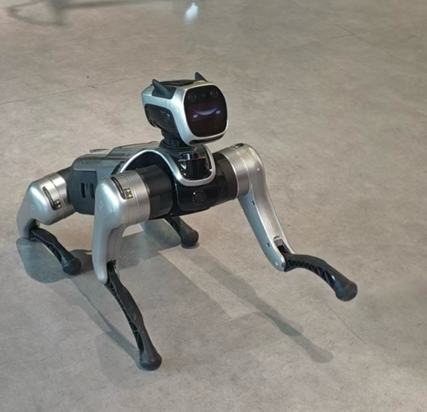
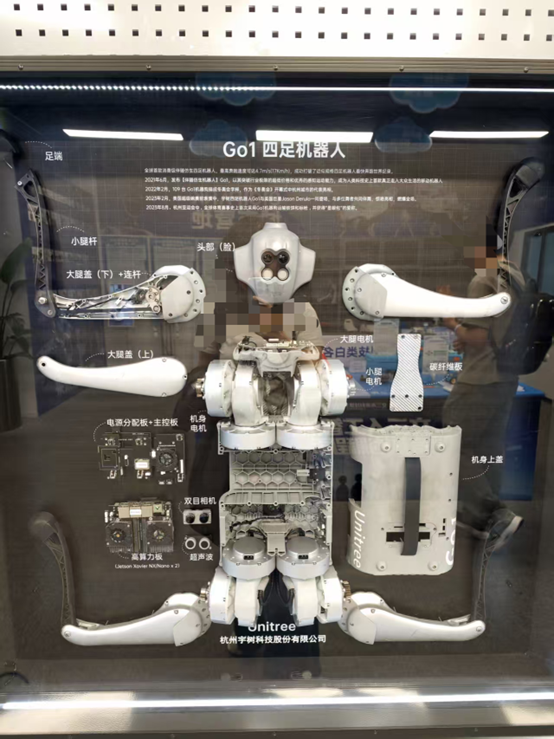
As one of China’s leading quadruped robotics companies, Unitree showcased its popular consumer-oriented quadruped robot lineup, the GO2 series.
The series includes AIR, PRO, and EDU models, covering use cases ranging from home entertainment to education and research applications. Despite weighing only around 15kg, the robots can reach speeds of up to 5 meters per second and carry loads of up to 12kg.
Powered by Unitree’s fully in-house developed motion control algorithms, the robots smoothly perform jumps, climb slopes, overcome 16cm obstacles, and avoid obstacles autonomously.
Unitree’s Strength Extends Beyond Quadrupeds: The G1 Humanoid Demonstrates Commercialization
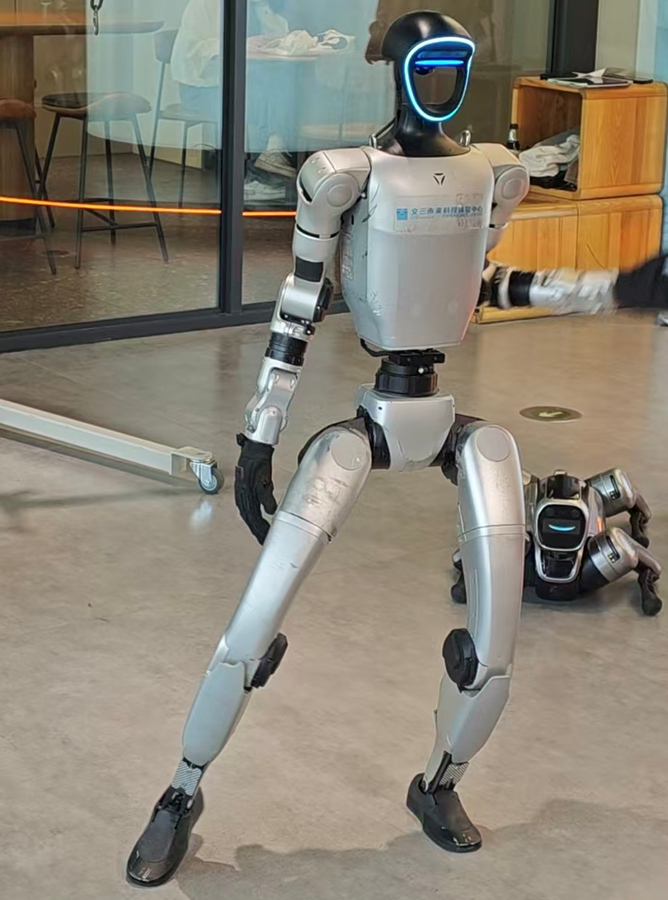
Unitree’s technological capabilities go far beyond consumer quadruped robots. One of the most impressive exhibits at the event was the company’s humanoid robot, the G1 series, a full-body humanoid platform developed entirely in-house and one of China’s earlier examples of successful mass production and commercialization of humanoid robots.
The G1 stands approximately 130cm tall and weighs around 35kg including its battery. The standard version features 23 degrees of freedom, while the EDU version can be expanded up to 43 degrees of freedom.
Each leg contains six degrees of freedom, while each arm includes five fundamental joints. Additional features such as force-controlled dexterous hands and wrist joints can also be added. The knee joints can generate torque up to 120N·m. Combined with Unitree’s full-body force control system, advanced motion control algorithms, 3D LiDAR, and depth cameras, the robot achieves highly stable real-time posture control and precise motion execution.
At the venue, the G1 also performed scheduled dance demonstrations.
The performance included coordinated upper-body movement, torso twisting, in-place rotation, squatting motions, one-legged balance shifts, and rhythmic multi-joint movements. Throughout the performance, transitions remained smooth and stable, with no noticeable wobbling or loss of balance. The synchronization with the music demonstrated the robot’s impressive multi-joint coordination and dynamic balancing capabilities.
The robot is also known for appearing in China’s Spring Festival Gala dance performances. According to staff at the venue, the demonstrations shown here were based on the same underlying motion control technologies used in those public performances. Visitors could also operate the robot using a controller, providing an even stronger impression of the platform’s flexibility and stability.
Industrial Quadrupeds Built for Harsh Environments: DEEP Robotics
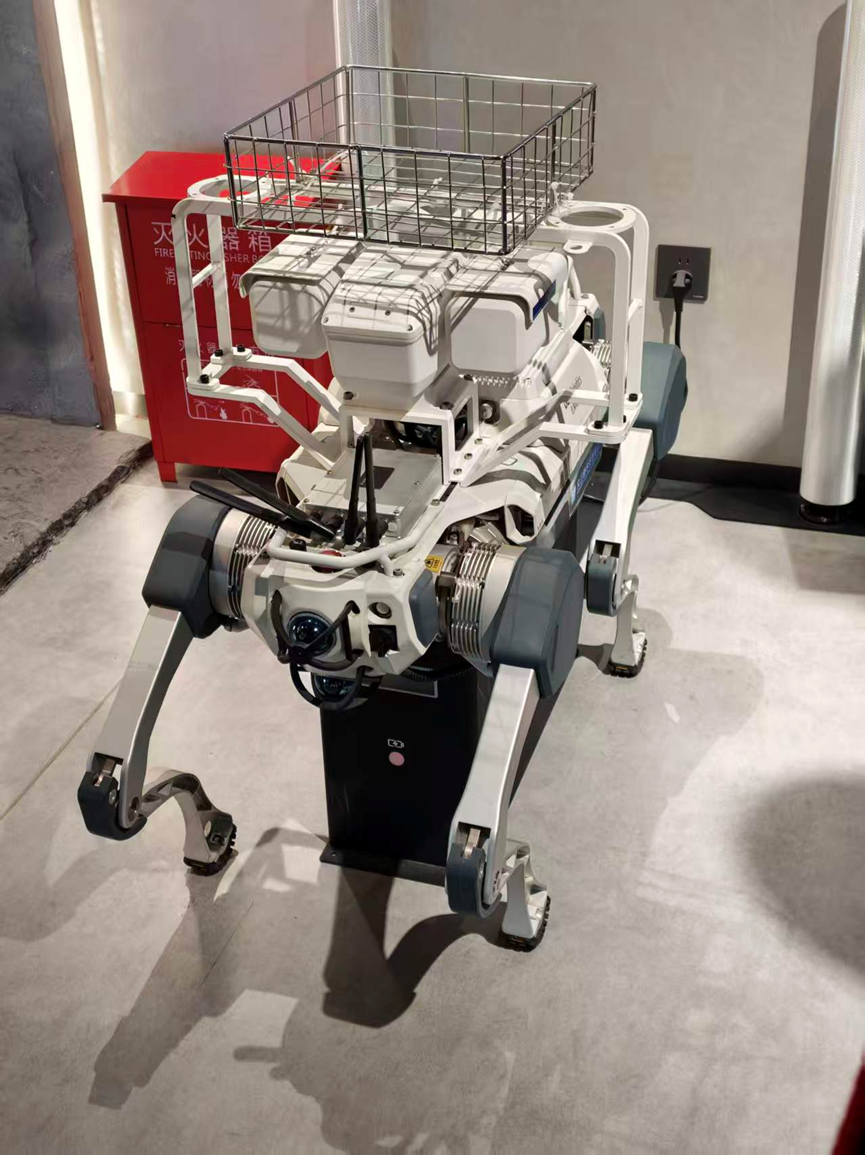
Adjacent to the Unitree section was the booth of DEEP Robotics, another member of the Hangzhou Six Little Dragons.
If Unitree pioneered the consumer quadruped market, DEEP Robotics appears focused on industrial and specialized applications.
The exhibition featured multiple models from the Jueying series, ranging from entry-level versions to professional industrial configurations, including exploration and laser-equipped editions. Pricing ranged from 16,900 RMB for entry-level units to 89,000 RMB for industrial-grade systems.
What stood out most was the robots’ terrain adaptability.
Designed for snowy environments, complex terrain inspections, and hazardous operations, the robots are built using mostly in-house developed core technologies, reportedly achieving around 95% domestic component independence. The company has already deployed its robots in over 100 industrial projects, including power plant inspections, factory security, emergency rescue, and firefighting operations.
The exhibition made it clear that quadruped robots are no longer merely futuristic prototypes — they are becoming practical industrial tools supporting public safety and infrastructure operations.
Compact Yet Powerful: GENISOM AI’s Gangben L1
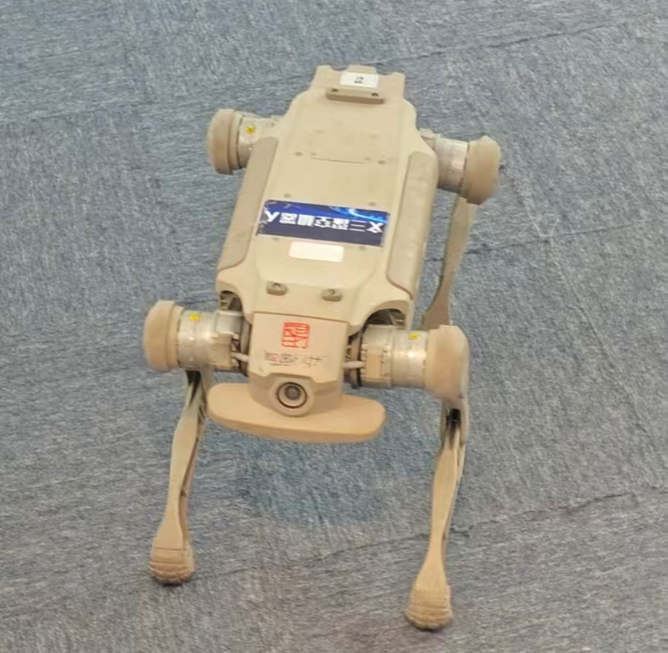
Another notable industrial quadruped was GENISOM AI’s Gangben L1.
This robot is described as the world’s first 15kg-class biomimetic quadruped robot designed specifically for industrial and special-purpose scenarios.
Despite its small size, it can reach speeds of 3.7 meters per second, climb 40-degree slopes, and handle 16cm stair steps. It supports an 8kg payload, impressive for its size category.
The robot also includes IP54 dust and water resistance, operates between 0°C and 40°C, and features shock resistance and external disturbance protection for stable operation in harsh environments.
The existence of such a refined product within a highly specialized niche market highlights how Chinese robotics companies are steadily advancing even in highly segmented sectors.
The Most Eye-Catching Humanoid: Agibot’s Expedition A2
Agibot’s Expedition A2 was arguably the most visually striking humanoid robot at the exhibition.
Officially announced in August 2024, it is described as the world’s first humanoid robot to simultaneously obtain China’s CR certification, Europe’s CE certification, and the United States’ UL certification.
Standing 169cm tall and weighing 69kg, the robot closely resembles human proportions. It features over 40 degrees of freedom and uses integrated joints developed in-house to achieve smooth walking, turning, object manipulation, and even Tai Chi or dance performances.
It also includes L4-level autonomous mobility and multimodal conversational capabilities, enabling flexible human-robot interaction without relying on fixed scripts.
Most importantly, the robot has already begun entering real commercial environments such as automotive dealerships, corporate showrooms, and trade exhibitions. This signals that humanoid robot commercialization is entering a serious phase.
The youth-oriented version being priced at 168,000 RMB also suggests that high-end humanoid robots may gradually become more accessible to broader commercial markets.
Collaborative Industrial Robotics: JAKA Robotics’ Zu12
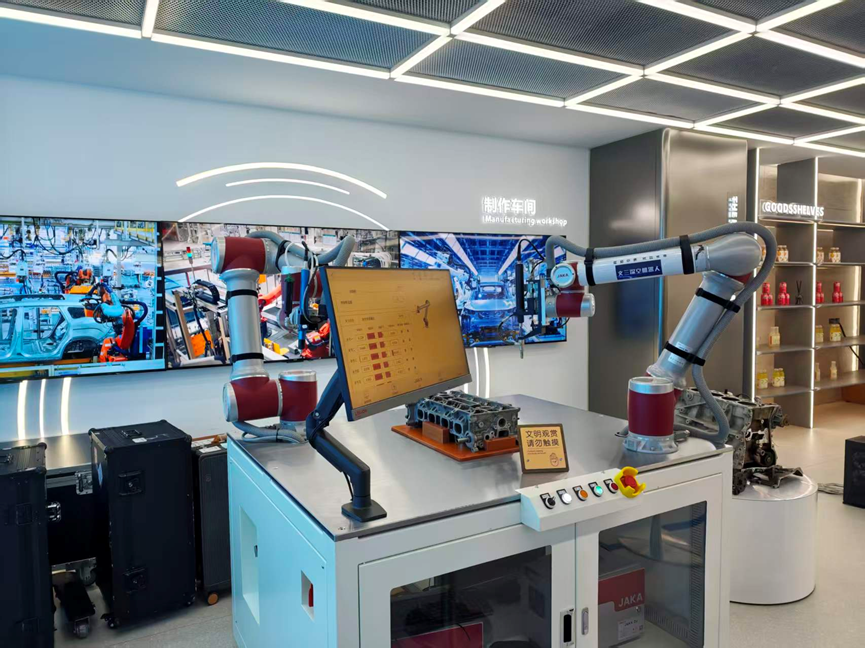
Moving from the humanoid area into industrial automation, the Zu12 collaborative robot by JAKA Robotics immediately stood out.
JAKA is one of China’s leading collaborative robotics companies, and the Zu12 is designed for demanding industrial applications.
The robot supports a 12kg payload with a working radius of 1327mm while weighing only 41kg itself, resulting in an industry-leading payload-to-weight ratio of 3.4:1.
Its integrated joint structure simplifies installation and maintenance, while its safety-focused design allows humans and robots to work together without safety fences.
At the exhibition, the robot demonstrated assembly, transportation, and sorting tasks with impressive speed and precision. The tool-end speed reached up to 3 meters per second while consuming only around 500W of power.
The robot is already used across automotive parts manufacturing, home appliances, and food processing industries, demonstrating how Chinese industrial robots are increasingly competing with imported solutions.
Robotics Expanding into Education and Households: UBTECH’s alpha ebot
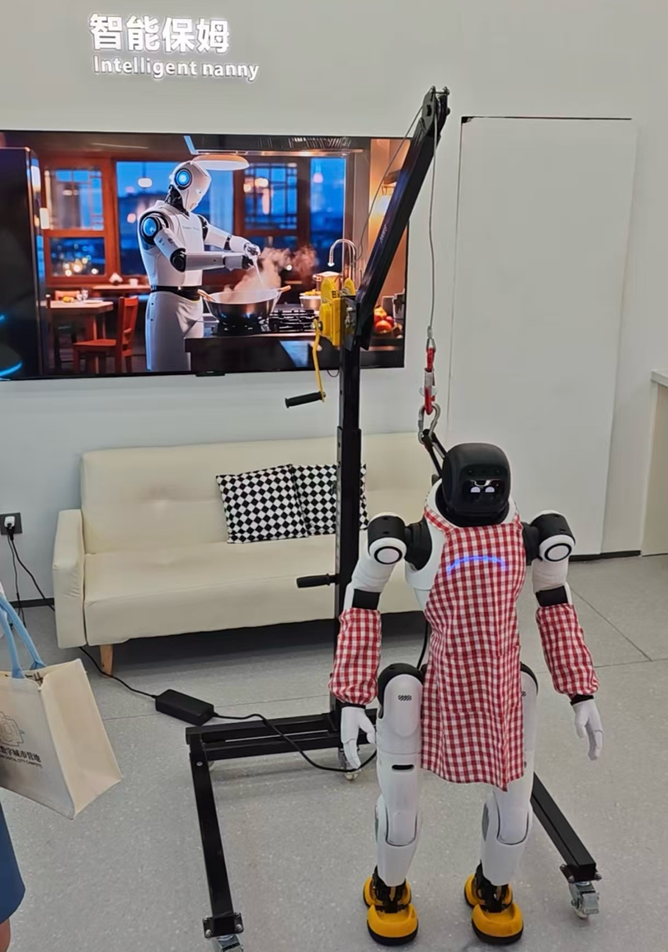
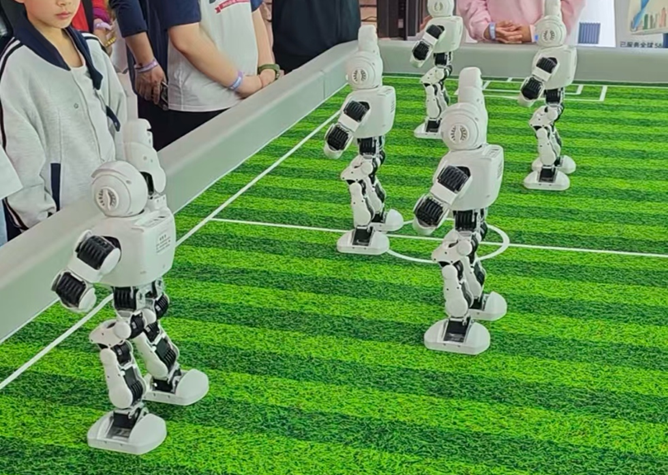
In the educational robotics section, UBTECH’s alpha ebot showcased another side of robotics adoption.
The robot is described as the first platform in China used for “The First Robotics Lesson” in schools and includes educational content and visual programming systems aimed at elementary and middle school students.
It supports natural voice interaction, personalized lifestyle settings, storytelling, poetry interaction, knowledge Q&A, and children’s habit formation assistance.
Priced at around 2,999 RMB, the robot demonstrates how AI and robotics education may increasingly enter ordinary households.
It also reflects how robotics technology is steadily expanding beyond industrial applications into education and daily life support.
Beyond Robots: The Broader Ecosystem Behind the Hangzhou Six Little Dragons
The venue also included a technology showcase area dedicated to the Hangzhou Six Little Dragons ecosystem itself.
It became clear that China’s robotics competitiveness is not based solely on hardware manufacturing.
For example, large language models like DeepSeek’s DeepSeek-V3 act as the “brains” of future robots, enabling advanced dialogue, reasoning, and multimodal interaction.
Meanwhile, BrainCo demonstrated non-invasive brain-computer interfaces and smart prosthetics that explore entirely new human-machine interaction paradigms.
Manycore showcased immersive digital space technologies and virtual-reality integration systems, further expanding how robots may interact with virtual environments.
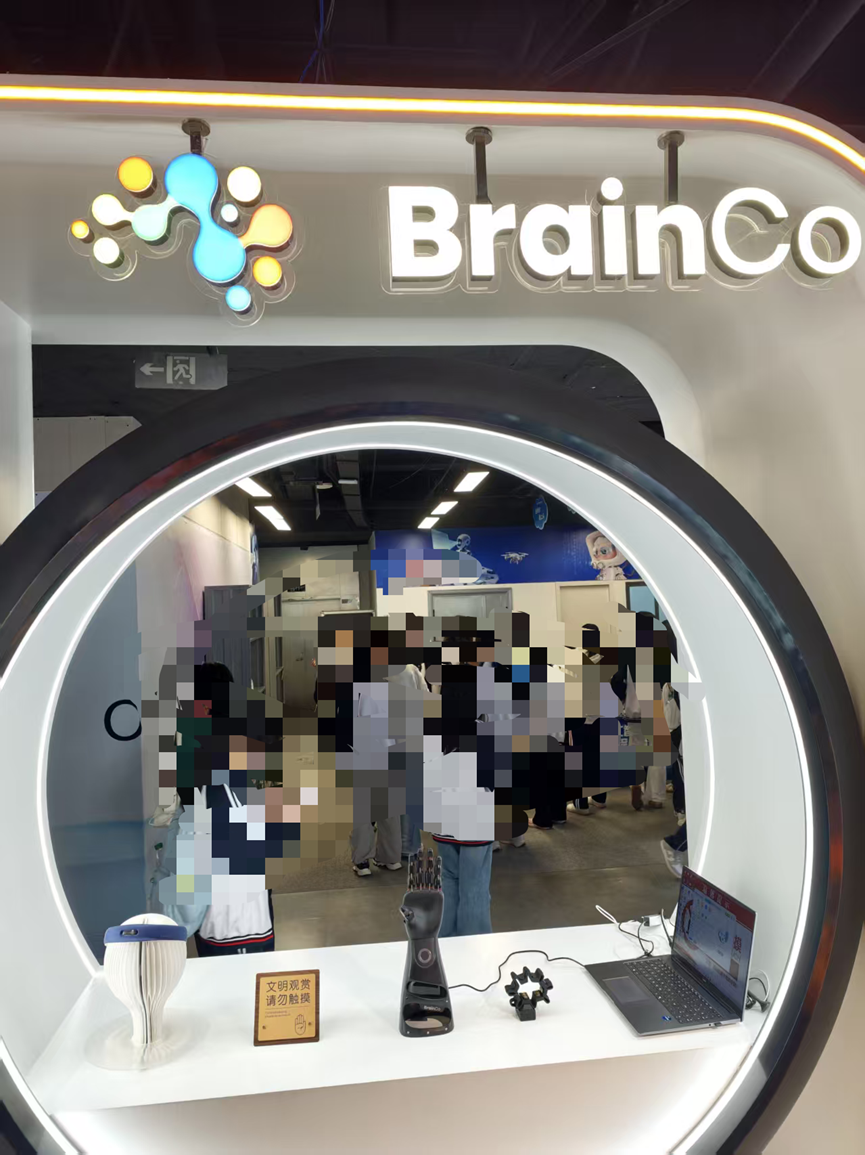
Seeing these technologies presented together highlighted how China’s robotics industry is being supported by collaboration across the entire industrial chain — including precision manufacturing, AI algorithms, interfaces, and digital content ecosystems.
China’s Robotics Industry: Strengths and Remaining Challenges
China’s robotics industry is currently undergoing a period of extraordinary growth.
From hardware components such as servo joints and motion control systems to foundational software like AI models and perception systems, many Chinese companies are pursuing full-stack in-house development strategies, with some products reportedly exceeding 90% domestic production rates.
At the same time, China is rapidly building a broad and mature robotics ecosystem.
The market now spans affordable household robots priced in the thousands of RMB to humanoids costing hundreds of thousands, as well as specialized industrial robots across many categories. Importantly, the ecosystem includes not only hardware, but also AI algorithms, application-specific solutions, and surrounding content platforms.
Regional clusters such as the Hangzhou Six Little Dragons demonstrate the strong synergy between advanced manufacturing and the Yangtze River Delta’s digital economy.
Of course, challenges still remain.
There are still areas requiring major breakthroughs, including ultra-high-precision components, generalized humanoid intelligence, and next-generation industrial robotics technologies.
Nevertheless, the exhibition strongly conveyed the impression that China’s robotics industry is gradually shifting from being a follower to becoming a creator of new global trends.
Robotics Education Is Expanding Rapidly
One particularly memorable aspect of the visit was seeing groups of Chinese middle school students attending the exhibition during spring field trips.
Rather than simply observing passively, many students actively engaged with the demonstrations, asked questions, and enthusiastically participated in hands-on experiences.
This highlighted how robotics in China is no longer limited to researchers and engineers — it is increasingly becoming part of education for the next generation.
In recent years, China has actively integrated AI, programming, and robotics into education at earlier stages, and facilities like the Wensan Future Technology Experience Center play an important role as practical learning environments.
From an industrial perspective, nurturing young people’s interest and understanding through these experiences is likely to strengthen the future talent pipeline supporting China’s robotics ecosystem.
Conclusion: What Japan Can Learn from China’s Robotics Momentum
This visit clearly demonstrated how China’s robotics industry is rapidly integrating software and hardware into a powerful ecosystem.
So what can Japanese companies learn from this situation?
Historically, Japan has maintained world-class competitiveness in high-precision robotics hardware components such as reducers, motors, and sensors. However, in areas such as AI integration and software platforms — effectively the “brains” of robots — Chinese companies appear to be building ecosystems at remarkable speed.
In the future, robotics may evolve similarly to PCs and smartphones, with increasingly strong horizontal specialization between hardware and software.
The software-driven development approaches seen throughout the exhibition — particularly those leveraging AI algorithms and simulation technologies — offer valuable lessons for Japanese companies as well.
By combining Japan’s outstanding hardware expertise with advanced AI models, simulation environments, and reinforcement learning technologies, there is significant potential to create uniquely Japanese next-generation robotics solutions.
As the era of Physical AI arrives — where AI directly solves real-world physical problems rather than remaining confined to digital environments — Japanese companies have an important opportunity to bridge the gap between hardware and software and create entirely new forms of business value.